
Chimborazo Volcano
The point on the Earth’s surface closest to the Sun, at 6,263 metres
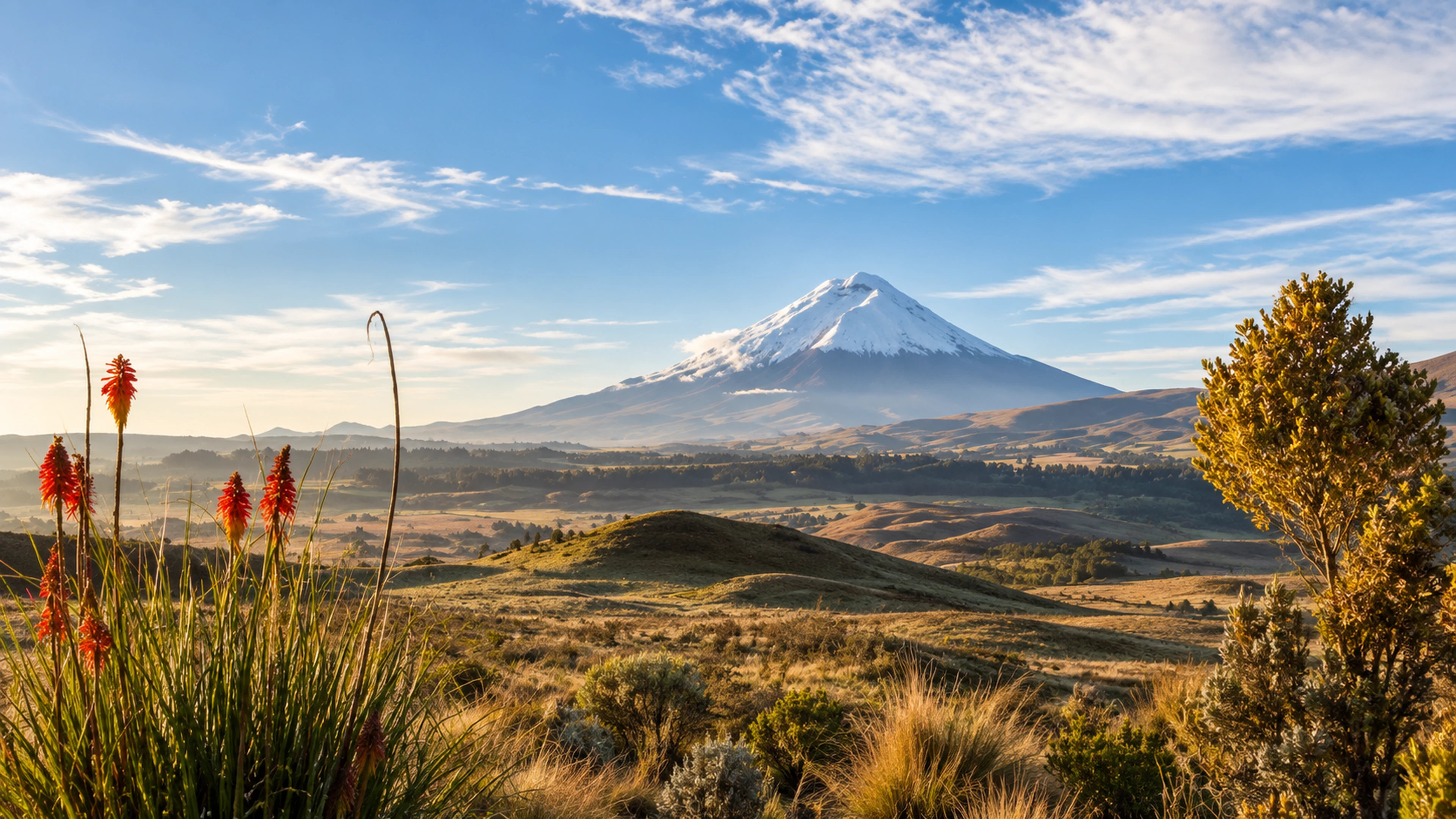
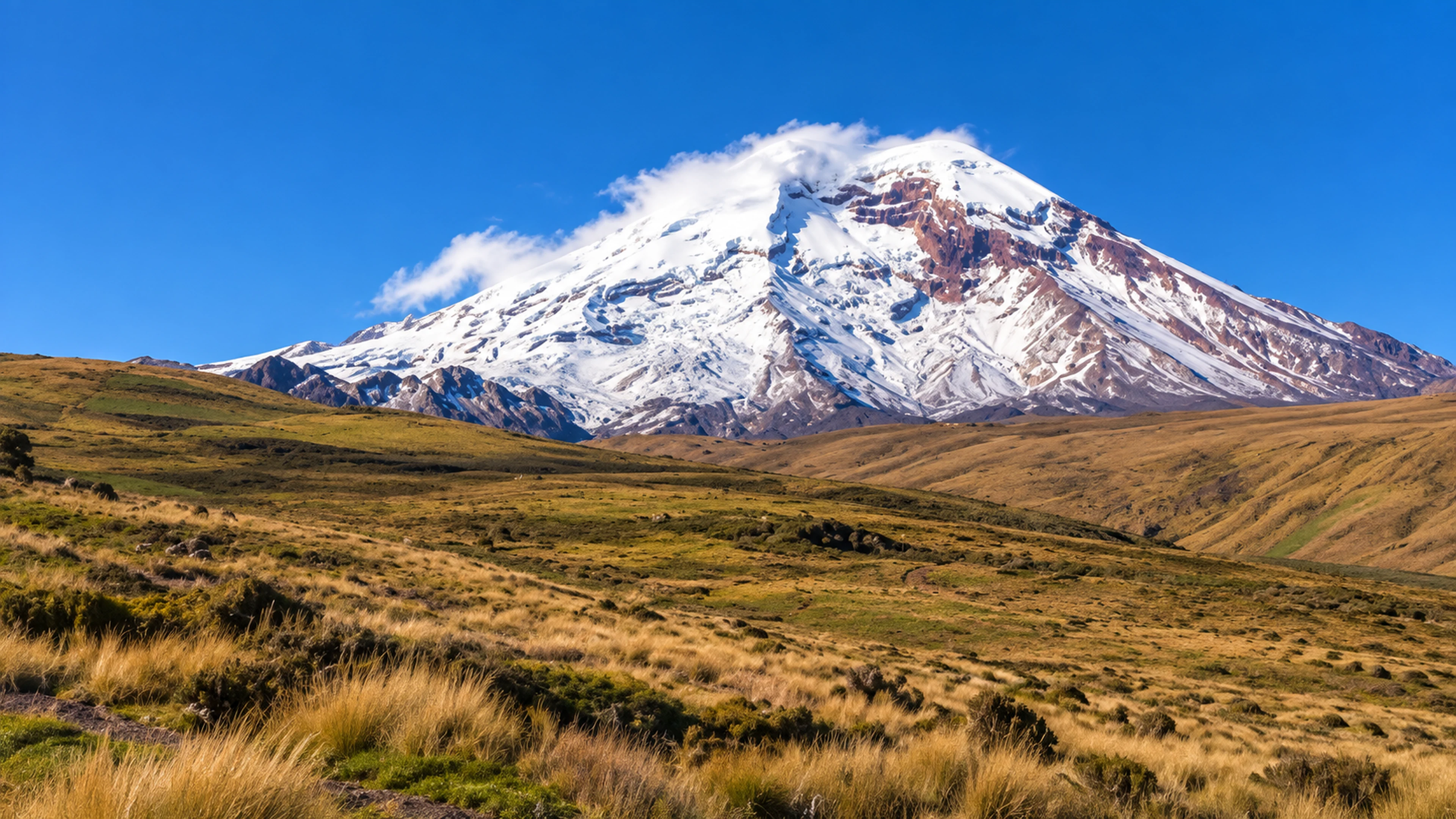
Chimborazo tops out at 6,263 metres, but its decisive figure is another: thanks to the equatorial bulge, its summit stands 6,384.4 kilometres from the centre of the Earth, some 2.1 kilometres further out than the top of Everest. It is the point on the planet’s surface closest to the Sun, and a vehicle reaches 4,800 metres.
What you will see
The Carrel Refuge
A vehicle takes you to roughly 4,800 metres, with no technical skill, no rope and no crampons.
The Walk to Whymper
An hour uphill to 5,000 metres: the highest walkable point open to the general traveller in Ecuador.
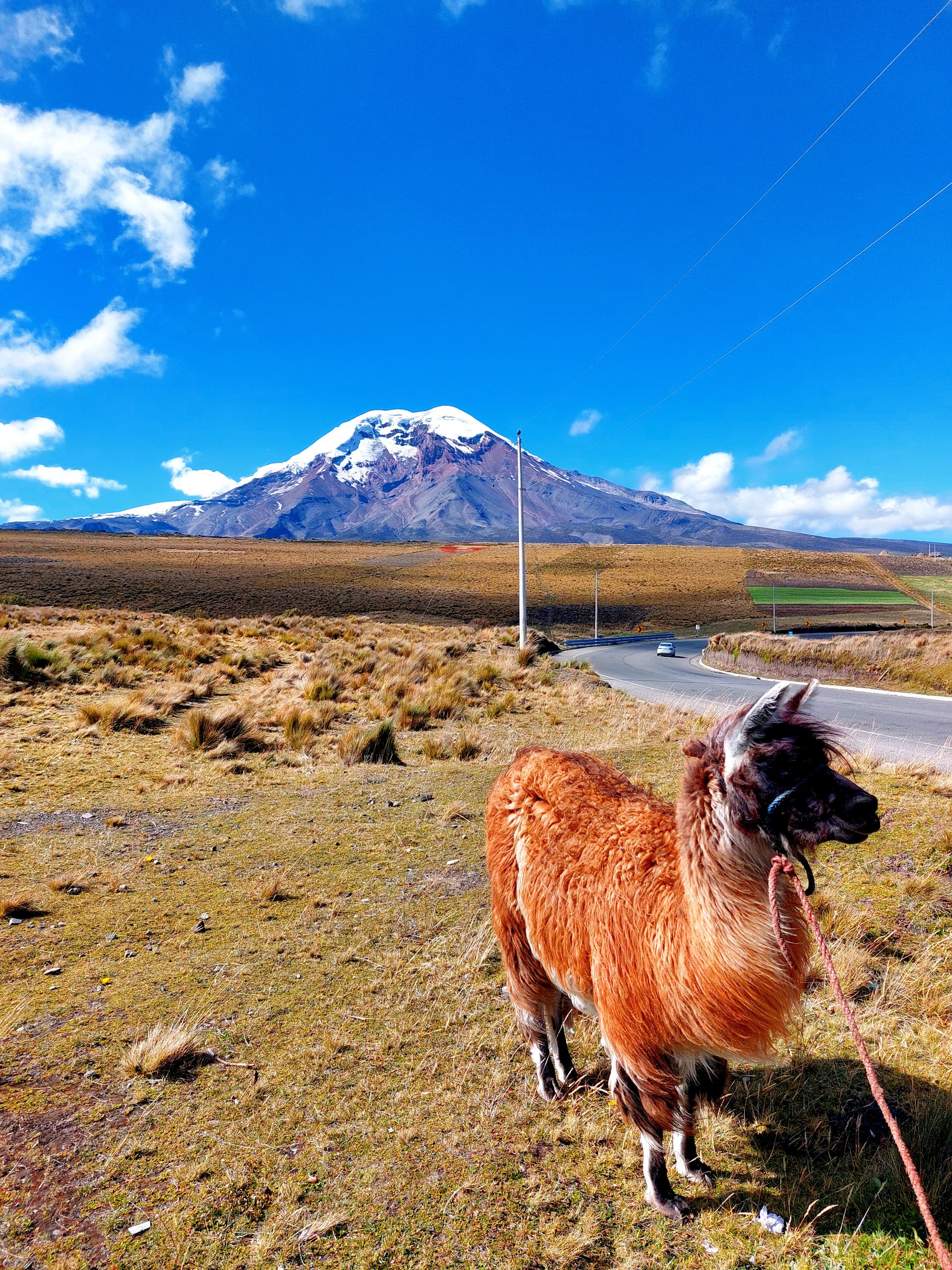
Vicuñas on the Grasslands
The reserve’s emblematic species since 1987, they graze in groups visible from the access road.
Wildlife & flora
The vicuña is the emblematic species of the Chimborazo Fauna Production Reserve, alongside llamas and alpacas; 58,560 hectares protected since 1987. There are 31 Andean bird species, among them the Andean condor and the Ecuadorian hillstar, a hummingbird of these heights, plus the Andean fox and the páramo rabbit. The flora is Polylepis, tussock grass and chuquiragua. December to January and June to August open the clearest windows; the mountain reveals itself at dawn and clouds over by mid-morning.
What you should know
Driving to 4,800 metres without acclimatising is the commonest cause of altitude sickness here: sleep two or three nights above 2,800 metres first and take the Whymper walk slowly. The volcano is not active, its last known eruption around the year 550, so there is no eruptive risk. Expect extreme cold and wind at 5,000 metres, and occasional closures of the access road for snow.